
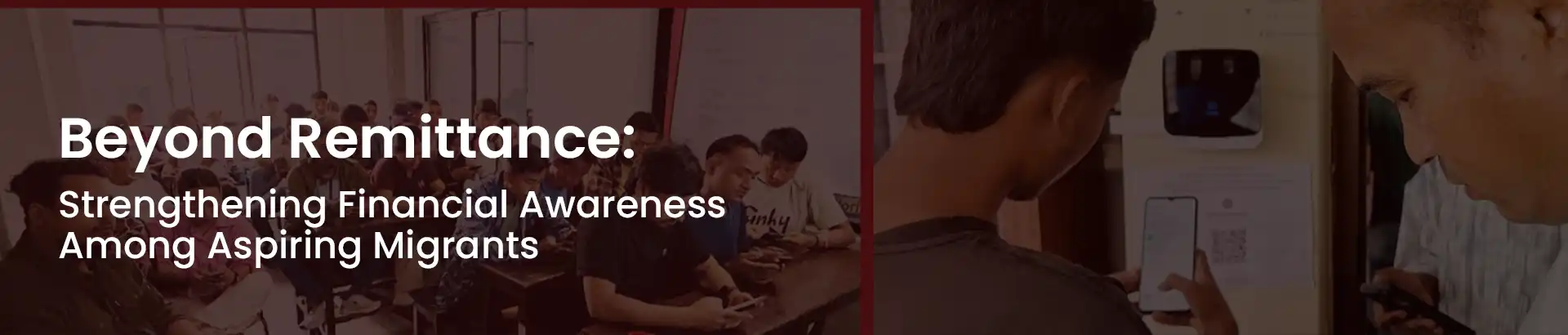
Beyond Remittance: Strengthening Financial Awareness Among Aspiring Migrants
Every year, thousands of Nepalis leave for overseas employment and education opportunities, carrying with them aspirations for a better future for themselves and their families. Yet, beyond securing a visa and employment contract, many migrants begin their journey with limited knowledge of how to effectively manage their finances once they are abroad.
Esewa Money Transfer has been actively participating in Pre-Departure Orientation Sessions across Nepal, delivering financial literacy programs that help aspiring migrants navigate key financial decisions from safe remittance practices to savings, investments, and long-term financial planning before they begin their overseas journey.
These sessions are designed to go beyond remittance awareness. They focus on building financial confidence and helping migrants understand how to safely transfer money, support their families, access financial services, and make informed decisions that contribute to their long-term financial wellbeing.
Financial Literacy: An Essential Part of the Migration Journey
For many first-time migrants, moving abroad brings both opportunity and responsibility. Alongside adapting to a new country and workplace, they often become the primary financial support for their families back home.
To help migrants prepare for these responsibilities, the sessions cover practical topics such as:
Safe and secure remittance practices
The risks associated with informal remittance channels
Digital financial services and their practical applications
Savings and investment opportunities
Social security and insurance contributions
Long-term financial planning and wealth creation
The discussions revealed an encouraging trend: migrants are increasingly viewing remittance as more than just a means of supporting daily household expenses. Many are exploring ways to use their earnings to build savings, invest for the future, and strengthen their family's financial security.
A Digitally Ready Generation of Migrants
One of the most notable observations from the sessions was the growing familiarity with formal financial services among aspiring migrants. More than 60% of participants already had active eSewa wallets, while almost all attendees maintained bank accounts. Many were already comfortable using digital channels for payments and financial transactions, reflecting a broader shift towards faster, more convenient, and more accessible financial services.
For today's migrants, digital remittance is not simply about transferring money home. It is about maintaining financial control from abroad and staying connected to the financial needs of their families in real time.
Through digital channels, migrants can support household expenses, contribute to savings, make insurance payments, fund investments, and manage recurring financial obligations without requiring family members to visit physical counters.
What We Heard from Aspiring Migrants
While each migrant's journey is unique, several common concerns and aspirations emerged during the sessions. Many participants expressed concerns about managing family responsibilities from overseas, particularly those leaving behind elderly parents, spouses, and young children. Their primary concern was not just how to send money home, but how to remain actively involved in important financial decisions while living abroad.
Others showed a strong interest in financial planning and wealth creation. Conversations frequently extended beyond remittance transfers to topics such as savings, Social Security Fund (SSF) contributions, insurance coverage, Systematic Investment Plans (SIPs), and future investment opportunities.
These conversations highlighted a significant shift in migrant behaviour. Today's migrants are increasingly seeking financial tools that offer both convenience and long-term value, enabling them to transform their earnings into meaningful financial progress.
Strengthening the Formal Remittance Ecosystem
Another encouraging takeaway from the sessions was the growing awareness of the importance of using formal remittance channels. Participants recognized the value of secure, transparent, and regulated remittance services compared to informal alternatives. Many were also interested in learning more about the financial benefits, protections, and opportunities available through the formal financial system.
Returnee migrants played an equally important role in the discussions. By sharing their experiences and lessons learned from working abroad, they provided practical insights for first-time migrants and reinforced the importance of making informed financial decisions from the very beginning of the migration journey.
Building a More Financially Informed Migrant Workforce
As Nepal's migration landscape continues to evolve, financial literacy will play an increasingly important role in strengthening financial inclusion and encouraging responsible remittance behaviour.
The insights gathered from these sessions reinforce an important industry reality: migrants today are looking for more than a transfer service. They are seeking trusted financial ecosystems that help them manage, save, invest, and plan for the future.
At Esewa Money Transfer, we remain committed to supporting this transformation by empowering aspiring migrants with the knowledge and tools they need before they depart. By promoting financial literacy and encouraging the use of secure, formal remittance channels, we aim to help migrants make better financial decisions that benefit not only their families but also Nepal's broader financial ecosystem.
When migrants are equipped with the right knowledge and resources, the impact extends far beyond remittance transfers - contributing to greater financial inclusion, stronger communities, and a more resilient economy.